

Which orthosis design is better for zone 5-6 extensor tendon injuries, a relative motion orthosis compared to a dynamic extension orthosis?
Filed under Reviews
M. Buhler, ˝ D. Gwynne-Jones, M. Chin et al., (2023) Are the outcomes of relative motion extension orthoses noninferior and cost-effective compared with dynamic extension orthoses for management of zones V-VI finger extensor tendon repairs: A randomizedcontrolledtrialJournalofHandTherapy.
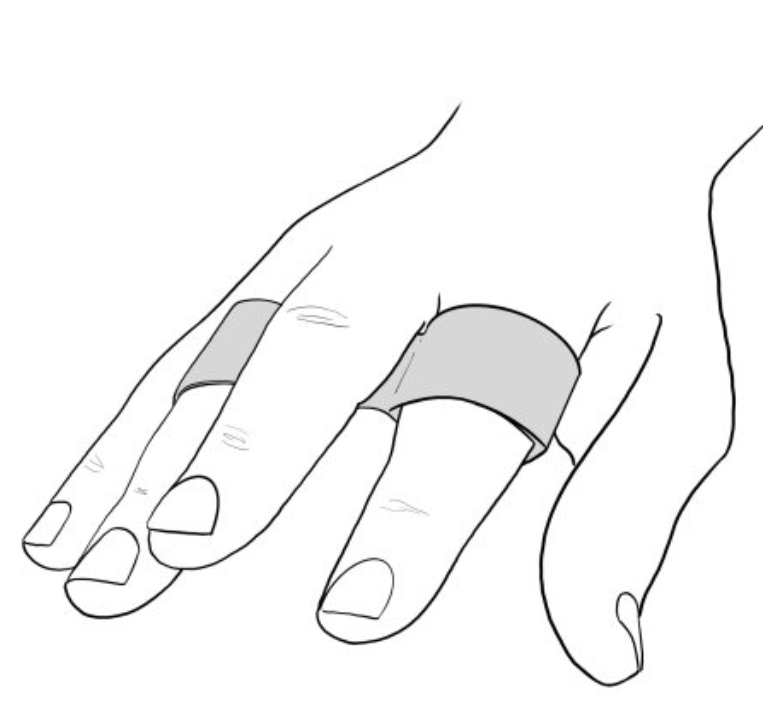
The Skinny: The aim of this study was to compare the data for two different types of orthoses for treating a zone 5-6 extensor tendon injury. Type one was a relative motion orthosis (RMO) plus, meaning the utilization of an RMO and a wrist support together. The second time was a dynamic wrist hand finger orthosis. Participant in both groups were fitted with a nighttime extension orthosis
In the Weeds: There were a total of 37 participants in the study with a mean age of 39 years old with an extensor tendon repair in zone five or six. The study design was a parallel group non-inferiority randomized controlled trial design. Non-inferiority design is used when an alternate intervention is not any worse than the current established treatment.
Outcome measures included primary and secondary outcomes. The primary outcome measure was the total active range of motion (TAM), and the secondary outcomes included patient satisfaction, Quickdash and quality of life. These were measured at 6 and 12 weeks post-operative. Grip strength was only assessed at 12 weeks.
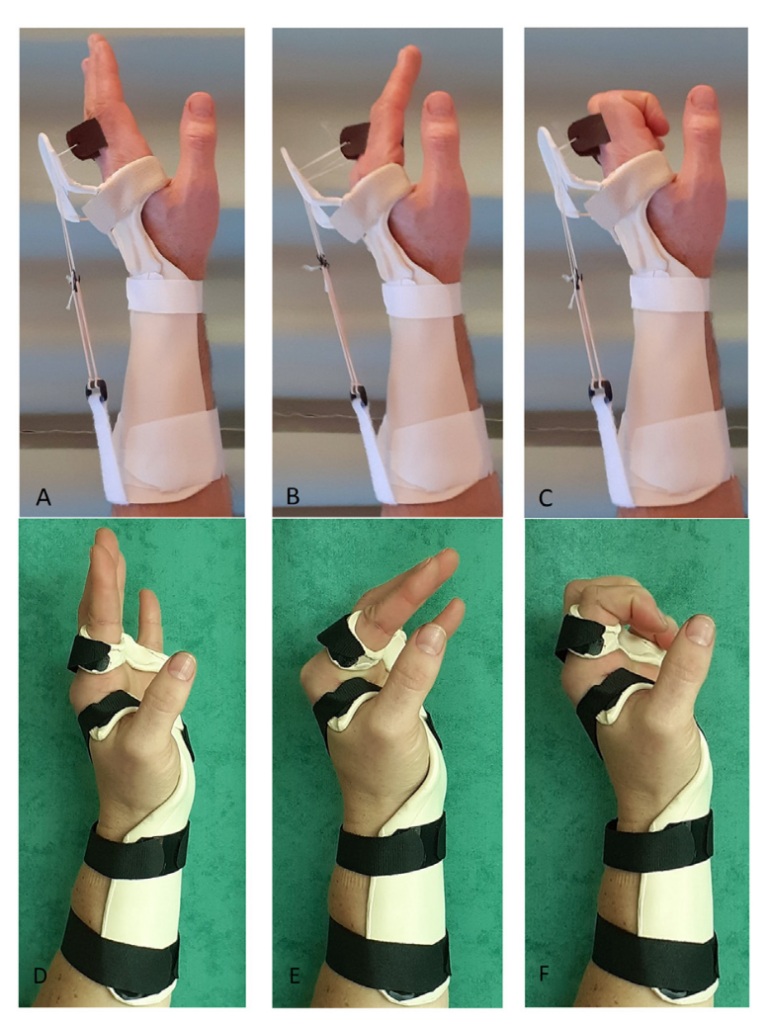
Image from article M. Bu ̋hler, D. Gwynne-Jones, M. Chin et al./Journal of Hand Therapy. Image A, B, and C depicts the dynamic orthosis group & image D, E, and F depicts the RMO plus group
Brining it Home:
There were no statistical differences in total active range of motion, orthotic or outcome satisfaction. Patient in the RMO plus group were more compliant in wearing the RMO plus compared to those wearing the dynamic orthosis. On average participants returned to work in both groups at 7 weeks post-operative. During the study there were two tendon ruptures in the RMO plus orthosis group compared to one in the dynamic orthosis group.
RMO plus management of extensor tendon injuries was determined to be non inferior to the dynamic orthosis group in terms of all outcome measures.
Rating : 4/5
Limitations to this study include the small sample size as well as the fact that all study participants were males showing a lack of generalizability. However even with the limitations of the study, it was shown that each patient group had equal findings and both types of orthotic designs are safe to use with zone 5 and 6 extensor tendons.
More To Read

Comparing Edema and Lymphedema: Understanding the Differences and Treatment Approaches in Hand Therapy
Comparing Edema and Lymphedema: Understanding the Differences and Treatment Approaches in Hand Therapy As hand therapists we often encounter patients presenting with swollen arms, hands, and/ or fingers, often attributing these symptoms to various conditions. Two commonly confused terms in this area are “edema” and “lymphedema.” While both involve swelling, they have distinct causes, presentations,…
Read More
Outcomes of Dorsal Bridging Plates
Outcomes of Dorsal Bridging Plates Fares, A. B., Childs, B. R., Polmear, M. M., Clark, D. M., Nesti, L. J., & Dunn, J. C. (2021). Dorsal Bridge Plate for Distal Radius Fractures: A Systematic Review. The Journal of Hand Surgery. https://doi-org.methodistlibrary.idm.oclc.org/10.1016/j.jhsa.2020.11.026 The Skinny Distal radius fractures (DRF) are a common injury that we see in…
Read More
Video-augmented mirror therapy for upper extremity rehabilitation after stroke
Kim, H., Kim, J., Jo, S., Lee, K., Kim, J., & Song, C. (2023). Video augmented mirror therapy for upper extremity rehabilitation after stroke: a randomized controlled trial. Journal of Neurology, 270(2), 831-842. Article Review: Shannon Skowbo The Skinny: This single-blind, randomized control trial aimed to assess the effects of mirror therapy for stroke patients…
Read More
Sesamoid Bones: What are they and what do they do?
By Brittany Carrie A Student’s Perspective During the first few weeks of my rotation, I was exposed to many new and exciting things that I had not been exposed to in the classroom setting. I observed and helped treat patients who had undergone severe trauma from lacerating tendons to complete amputations, saw different splinting techniques,…
Read More
Sign-up to Get Updates Straight to Your Inbox!
Sign up with us and we will send you regular blog posts on everything hand therapy, notices every time we upload new videos and tutorials, along with handout, protocols, and other useful information.