

By: Dalton Busch
Below I have created a list of some of the common assessments that are seen in the hand therapy world. Keep in mind that this list is not inclusive of all the assessments you might come across in this setting. With each assessment, I describe what it is, who the assessment is appropriate to use with, and the overall validity and reliability of the specific assessment if applicable. A reminder that reliability refers to the overall consistency of the assessment and validity assures the assessment is measuring what it is intended to. Some assessments listed are also accompanied by a hyperlink that goes to the SRAlab which is an excellent resource for learning more about assessments of interests.
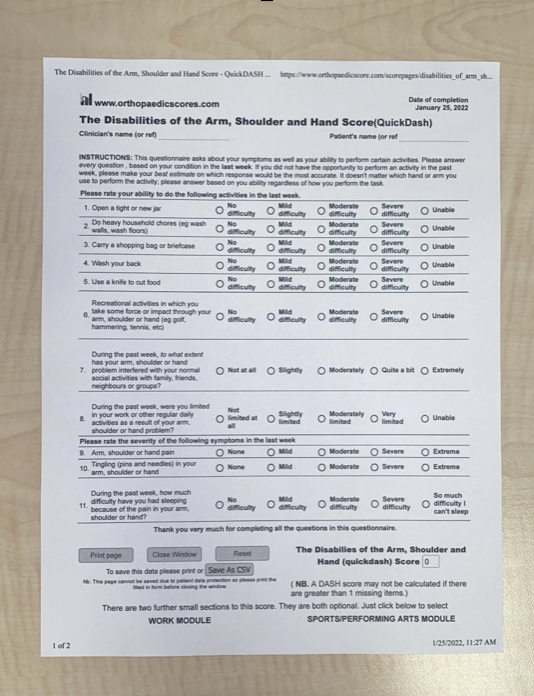
- Quick Disabilities of Arm, Shoulder & Hand (DASH)
- What is it: assesses functional disability in patients who have any or multiple, musculoskeletal disorders of the upper limb. It is a self-report questionnaire that is efficient and can easily be readministered to evaluate progress in therapy.
- Areas of Assessment: ADLs, coordination, dexterity, pain, strength, and QOL
- Applicable Population: Adolescents to elderly adults – patients with UE conditions.
- Validity and Reliability:
- Reliability related to UE Musculoskeletal Disorders – Gabel (2009): Excellent test-retest reliability
- Face validity for UE Musculoskeletal Disorders – Gabel (2009): supported based on development studies and focus groups
- https://www.sralab.org/rehabilitation-measures/quick-disabilities-arm-shoulder-hand
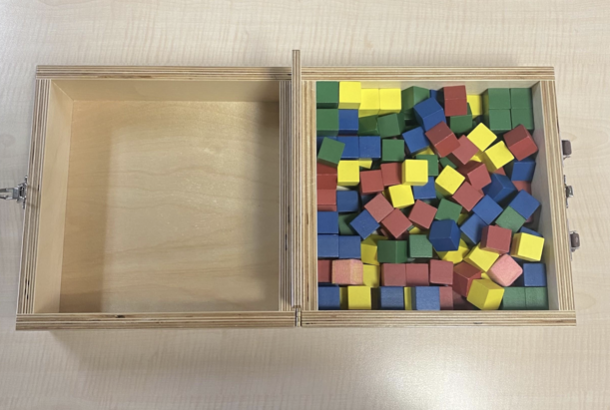
- Box and Block Test
- What is it: testing patients’ grasp patterns and overall functional dexterity
- Areas of Assessment: coordination, dexterity, and UE function
- Applicable Population: child to elderly adults – patients with UE conditions, assessing ability to cross midline, neurological populations, etc.
- Validity and Reliability:
- Reliability related to the adult population – Mathiowetz et al., (1985): excellent interrater reliability for right and left hand
- Follow the link for validity results – depicted in a chart
- https://www.sralab.org/rehabilitation-measures/box-and-block-test
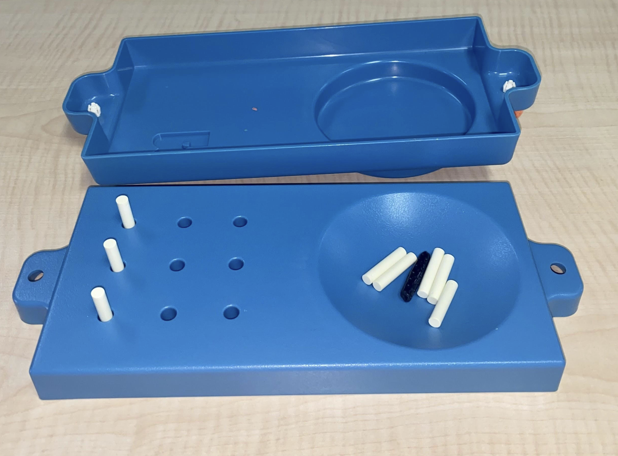
- 9-Hole Peg Test
- What is it: a very quick and effective assessment that tests patients’ dexterity. This is a great assessment to utilize for quick reassessments and to measure progress with your patients.
- Areas of Assessment: dexterity and UE function
- Applicable Population: adults to elderly adults – some specific populations listed are stroke, Parkinson’s, and M.S.
- Validity and Reliability:
- Reliability related to the adult population – Wang et al., (2011): excellent interrater reliability for right and left hand
- Face validity is not listed for this assessment
- https://www.sralab.org/rehabilitation-measures/nine-hole-peg-test
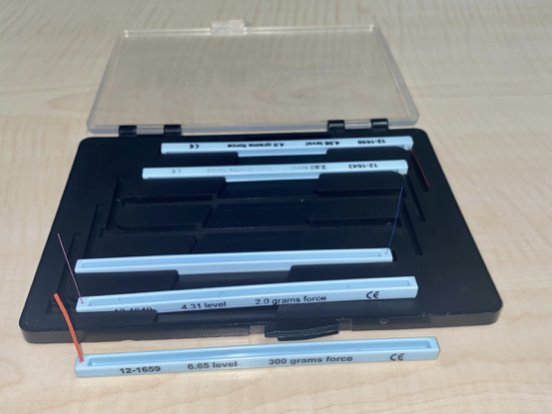
- Semmes Weinstein Monofilament
- What is it: this assessment is a quick and effective way to assess patients’ sensation and light touch. A common concern in the hand therapy world with several conditions is whether or not patients are at risk for further injury due to altered sensation. The monofilament is an easy method to quickly assess where their sensation is based on the thickness of the monofilament and what education needs to be given based on the results.
- Areas of Assessment: sensation, light touch, temperature, pain
- Applicable Population: any patient who may be at risk for further injury due to altered sensation
- Validity and Reliability:
- The reliability and validity of the Semmes Weinstein Monofilament Test were confirmed for a reliable sensory examination (Suda, et al., 2021).
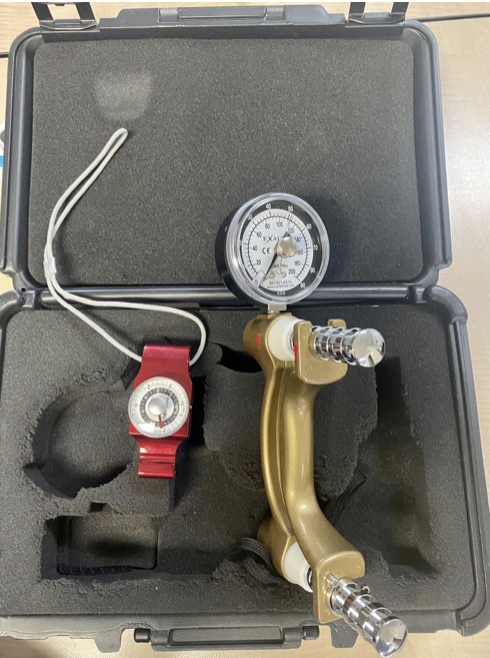
- Grip Strength
- What is it: this is a very quick and reliable objective measure for assessing patients’ hand and forearm strength. Along with assessing the hand and forearm, you will typically assess pinch strength if applicable.
- Areas of Assessment: UE strength, grasp, and pinch strength
- Applicable Population: all ages (therapist judgment based on children) – assure you are following surgical precautions given if strengthening is to be avoided in the early stages of recovery
- Validity and Reliability:
- Reliability related to the adult population – Lindstron-Hazel et al., (2009): excellent interrater reliability
- Criterion validity related to the adult population – Bellace et al., (2000): excellent concurrent validity between both hands
- https://www.sralab.org/rehabilitation-measures/hand-held-dynamometergrip-strength
- Manual Muscle Testing
- What is it: a very quick and efficient tool a therapist can use to assess ones UE muscle strength in many different ranges. Scoring is based on a scale and assessed by the therapist. It is always suggested that the same therapist complete MMT on the patient to assure the best measure and result.
- Areas of Assessment: strength
- Applicable Population: infant to the elderly adult populations
- Validity and Reliability:
- Reliability related to musculoskeletal conditions – Rider, L.G. et al., (2010): excellent interrater reliability
- Face validity related to musculoskeletal conditions – Rider, L.G. et al., (2010): acceptable face validity especially for the frequently involved muscle groups
- https://www.sralab.org/rehabilitation-measures/manual-muscle-test
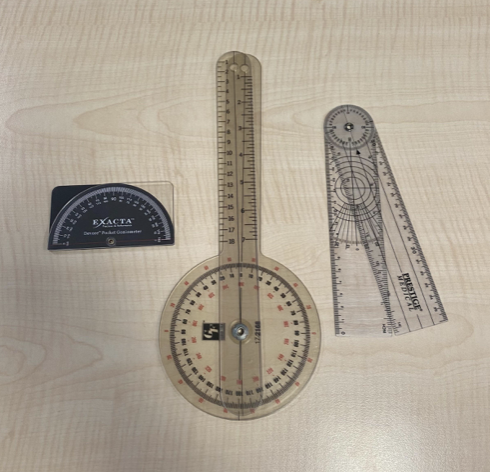
- Range of Motion
- What is it: to assess patients’ ability to passively and actively move the UE. ROM can be assessed on the shoulder, elbow, forearm, wrist, and digits. ROM is an amazing tool to be able to see where a patient may be compared to the general population by utilizing normative data charts based on the gender, age, and the plane/body part you are assessing.
- Areas of Assessment: functional mobility
- Applicable Population: all populations are applicable for ROM assessments
1 Comment
Leave a Comment
More To Read

Hand Therapy: How to Treat the Client with a New Distal Radius Fracture
A short blog post on the basics of treating a Distal Radius Fracture.

Dorsal Scapular Nerve Entrapment and Thoracic Pain
Don’t Forget to Evaluate for Dorsal Scapular Nerve Entrapment By Delaney Wright If your patient presents with any upper thoracic pain, it is critical to take measures to evaluate for dorsal scapular nerve entrapment. In a study completed by Sultan et al. (2013), 55 patients with interscapular pain were evaluated clinically and via nerve conduction…

Ultrasound use for reducing pain: Does it work?
Ilter, L., Dilek, B., Batmaz, I., Ulu, M.A., Sariyildiz, M.A., Nas, K., & Cevik, R. (2015). Efficacy of pulsed and continuous therapeutic ultrasound in myofascial pain syndrome: A randomized controlled study. American Journal of Physical Medicine & Rehabilitation, 94(7), 547-554. https://doi.org/10.1097/PHM.0000000000000210 Review by: Megan Prather The Skinny- Ultrasound hand therapy – ultrasound has been determined…
3 Common Reasons for Ulnar-Sided Wrist Pain and Non-Surgical Hand Therapy Treatment Options
3 Common Reasons for Ulnar Sided Wrist Pain

Sign-up to Get Updates Straight to Your Inbox!
Sign up with us and we will send you regular blog posts on everything hand therapy, notices every time we upload new videos and tutorials, along with handout, protocols, and other useful information.
Thanks a lot!