

Changes in ROM of the MCP after Trapeziometacarpal Arthrodesis
Filed under Reviews
Rapid Review: Changes in ROM of the MCP after Trapeziometacarpal Arthrodesis
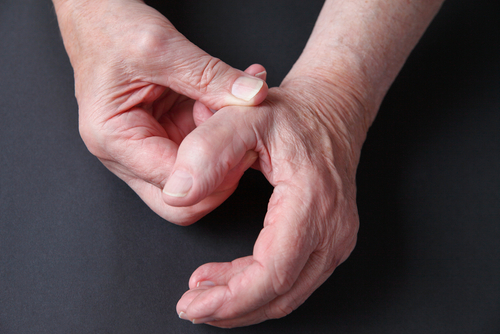
Hayashi, M., Kato, H., Komatsu, M., Yamazaki, H., Uchiyama, S., & Takahashi, J. (2021). Changes in the Functional Range of Motion of the Thumb Metacarpophalangeal Joint After Trapeziometacarpal Arthrodesis for Patients With Advanced Trapeziometacarpal Osteoarthritis. The Journal of hand surgery, S0363-5023(21)00613-4. Advance online publication. https://doi.org/10.1016/j.jhsa.2021.09.018.
The Skinny:
Several published studies have advocated for simultaneous procedures for thumb cmc arthritis. The procedures include the Trapeziometacarpal (TMC) arthrodesis and correction of the hyperextension deformity of the MCP joint. This study looked to determine if a procedure to the MCP joint was necessary to correct the hyperextension of the joint by determining changes in the range of motion of the thumb MCP Arthrodesis before and after TMC arthrodesis. The authors also looked to determine functional ROMs of MCP joints (MCP ROM) before and after TMC arthrodesis.
In the Weeds
A total of 15 thumbs in 12 patients were TMC osteoarthritis underwent a TMC arthrodesis between 2010 and 2015. Ten thumbs were examined using preoperative radiographic measurements including the extension of the MCP joint while the thumb was resting. All thumbs were symptomatic stage III Eaton classification for TMC osteoarthritis and were treated with TMC arthrodesis. Measurements were repeated post-operatively. The patient’s average age was 66 years of age, and there were 3 males and 6 females enrolled in the study. Post-operative measurements were taken at a minimum of 10 months and a maximum of 28 months after surgery.
Range of motion was evaluated during the following ADL tasks: holding a glass, opening a bottle lid, opening and closing a plastic cap, twisting a towel, grasping a steering wheel, buttoning a shirt, pulling a note out of a wallet, clipping fingernails, typing a keyboard and washing a face.
Bringing it Home
The MCP’s average functional range of motion in the flexion plane increased from 26 to 38 degrees, and the average extension of the MCP joint decreased from 16 to 5 degrees hyperextension. There were no significant changes in the total arc of motion. ADL tasks before and after the arthrodesis required half of the active range of motion of the MCP joint. The study results suggest a simultaneous procedure to correct the hyperextension deformity of the MCP joint might be unnecessary when performing TMC arthrodesis.
Rating: 4/5
The study had a few limitations. The number of patients in the study was small, making it difficult to draw conclusions from the study. There was no control group in the study for comparison. The study could potentially replicated on a larger scale to draw more affirmative conclusions.
More To Read

Should we still be immobilizing the thumb in scaphoid fractures, or is a wrist-only cast just as effective?
Article:Harper, K. J., Rees, Y., Tan, N. X., Li, H., Fonseca, E. A., Quach, P. G., Lee, G. S., Brayshaw, J.R., & McGarry, S. (2025). Determining the success of clinical outcomes for thumbimmobilization compared to no thumb immobilization in adult non-displaced, non-surgically managed scaphoid fractures: A systematic review. Hong Kong journal ofoccupational therapy. The Skinny:This study…
Article Review: Trapeziectomy and LRTI: What can patients with CMC osteoarthritis expect 12 months after the procedure?
Janakiramanan, N., Miles, O., Collon, S., Crammond, B., McCombe, D., & Tham, S. K. (2021). Functional Recovery Following Trapeziectomy and Ligament Reconstruction and Tendon Interposition (Trapeziectomy and LRTI): A Prospective Longitudinal Study. The Journal of hand surgery, S0363-5023(21)00304-X. Advance online publication. https://doi.org/10.1016/j.jhsa.2021.04.036 The skinny: Patients with trapeziometacarpal (TMC) osteoarthritis who are candidates for a trapeziectomy and…

Do you know the secret ingredient to recovering from an injury?
Do you know the secret ingredient to recovering from an injury? I will give you a hint it is 5 letters and begins with the letter S. SLEEP Have you ever asked yourself a question – does sleep help injuries heal? This is for you to share with your patients but also serve as a…
How to Improve Fine Motor Translation Skills
By: Josh MacDonald The Basics – I lay a pile of small objects on the table and an open container for the client to put them into. What object I use depends on the client’s level. We’ll get to that later. Then, they use a 2-point pincer grasp to pick up one and shift it…

Sign-up to Get Updates Straight to Your Inbox!
Sign up with us and we will send you regular blog posts on everything hand therapy, notices every time we upload new videos and tutorials, along with handout, protocols, and other useful information.