Mirror therapy has many implications for therapy and can be used to treat many diagnoses that commonly involve the upper extremity. These include some of the Neuro Conditions we highlighted last week including, Stroke and Focal Hand Dystonia. Btw, you can download a mirror therapy exercises pdf here for free.
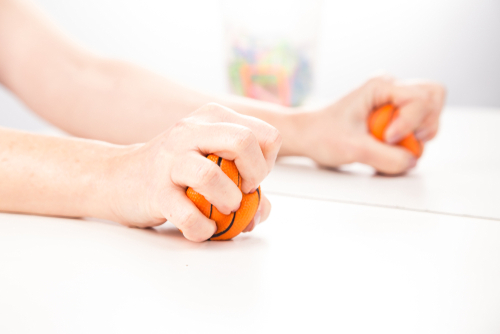
How long should the patient perform mirror therapy exercises? Should there be a sequence of routines prior to performing mirror therapy? There is no simple answer and a wide range of dosing information along with frequency and duration for performing mirror box therapy.
Despite the variety in rehab regimes for mirror therapy, the majority of them have demonstrated positive effects. From the studies, a general protocol was developed know as the St. Gallen MT Protocol. The St. Gallen MT Protocol was tested on 52 patients. Of those, 42 out of 52 patients showed a reduction in pain, improved function, and no phantom sensations.
Here are some key highlights from the studies and the St. Gallen MT Protocol.
Keys to using mirror therapy in treatment
- Explain clearly how mirror therapy works, the patient must have the buy-in
- Perform mirror therapy in a quiet environment
- Set up a home program using mirror therapy (mirror therapy boxes) can be made out of cardboard boxes by gluing a handheld mirror on the side or you can fabricate a wooden one for under $15 (see below video below).
- Utilize a patient log for tracking mirror therapy exercises.
- Review patient log at follow-up therapy visits
Duration
- Home Program must be performed 5-6x/day,
- Each session should be no longer than 5-10 minutes
- Adapt exercise based on diagnosis
Grunert-Pluss, N., Hugschmid, U., & Santschi, L. (2008). Mirror therapy in hand rehabilitation: A review of the literature, the st gallen protocol for mirror therapy and evaluation of a case series of 52 patients, 13, 1, 4-11.
Supply list for making a mirror box (mirror therapy handout)
https://www.handtherapyacademy.com/wp-content/uploads/2019/06/mirror-box-material-list-.pdf
Video on how to make a mirror box
2 Comments
Leave a Comment
More To Read

Hand Contractures from Arthrogryposis Multiplex Congenita
What is Arthrogryposis Multiplex Congenita?Arthrogryposis Multiplex Congenita (AMC) is a rare congenital condition that is characterized byan individual being born with multiple joint contractures, involving two or more areas of the body(Khurana et al., 2024). AMC is a general term that describes over 400 different medicalconditions that involve joint contractures, instead of just describing one…
Changes in ROM of the MCP after Trapeziometacarpal Arthrodesis
Rapid Review: Changes in ROM of the MCP after Trapeziometacarpal Arthrodesis Hayashi, M., Kato, H., Komatsu, M., Yamazaki, H., Uchiyama, S., & Takahashi, J. (2021). Changes in the Functional Range of Motion of the Thumb Metacarpophalangeal Joint After Trapeziometacarpal Arthrodesis for Patients With Advanced Trapeziometacarpal Osteoarthritis. The Journal of hand surgery, S0363-5023(21)00613-4. Advance online publication. https://doi.org/10.1016/j.jhsa.2021.09.018. The Skinny: Several published…

Hand Therapy as a New Grad or Student
Tips for Getting Prepared for hand therapy as a new grad or a Level II Fieldwork Everything you need to know in hand therapy starts with the upper extremity anatomy. Here is a quick checklist to review and hopefully help get you started in your new hand therapy setting. By: Tristany Hightower I suggest, as…
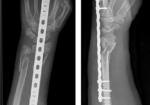
Outcomes of Dorsal Bridging Plates
Outcomes of Dorsal Bridging Plates Fares, A. B., Childs, B. R., Polmear, M. M., Clark, D. M., Nesti, L. J., & Dunn, J. C. (2021). Dorsal Bridge Plate for Distal Radius Fractures: A Systematic Review. The Journal of Hand Surgery. https://doi-org.methodistlibrary.idm.oclc.org/10.1016/j.jhsa.2020.11.026 The Skinny Distal radius fractures (DRF) are a common injury that we see in…

Sign-up to Get Updates Straight to Your Inbox!
Sign up with us and we will send you regular blog posts on everything hand therapy, notices every time we upload new videos and tutorials, along with handout, protocols, and other useful information.
I need help creating a similar box but the one I want has the mirror inside glued to box and has a 3 inch opening in the top wood above the mirror so you need to be standing up looking through opening to view the mirror and see your hand writing on paper (which of course will be reversed and challenging to even print your name.) I had one years ago and used it for children and Adults to learn about Dyslexia. Hoping you can help!
Sounds like a fun project. good luck and let us know how it turns out.