Carpal Tunnel Treatment: Splinting Only vs Splinting & Conservative Treatment
Filed under Treatments
Short-term clinical outcome of orthosis alone vs combination of orthosis, nerve, and tendon gliding exercises and ultrasound therapy for treatment of carpal tunnel syndrome. Sim, Sze En et al. Journal of Hand Therapy, Volume 32, Issue 4, 411 – 416
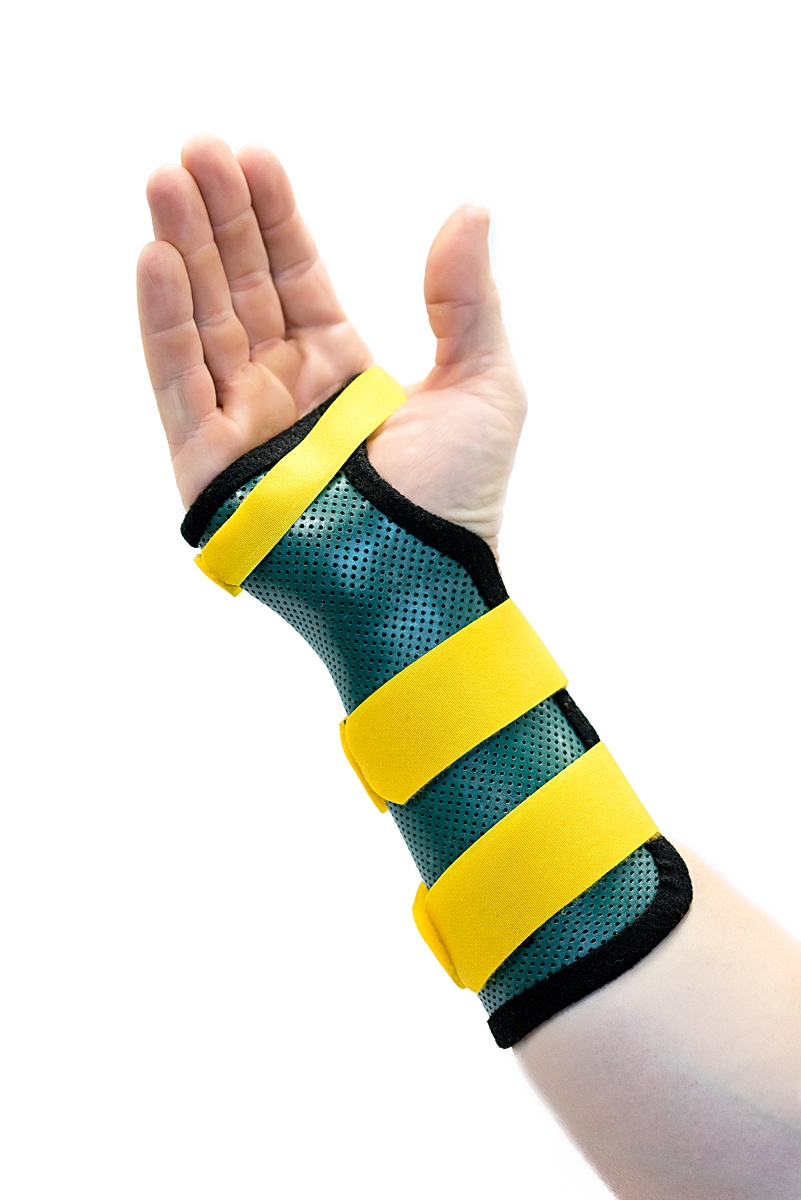
The Skinny- Carpal tunnel syndrome (CTS) is the most common compression neuropathy. Compression of the Median nerve within the transverse carpal ligament causes tingling and numbness to areas distal to the compression and along the nerve distribution area. This can progress to pain and loss of muscle mass if left untreated. Treatment of CTS varies, but commonly includes use of an orthosis to decrease pressure to the carpal tunnel and preserve blood supply to the area. Modalities have also been used with success. These include, but are not limited to, nerve and tendon glides, ultrasound and manual therapy. This article sought to compare the success of orthosis use alone versus orthosis use combined with carpal tunnel syndrome conservative treatment methods.
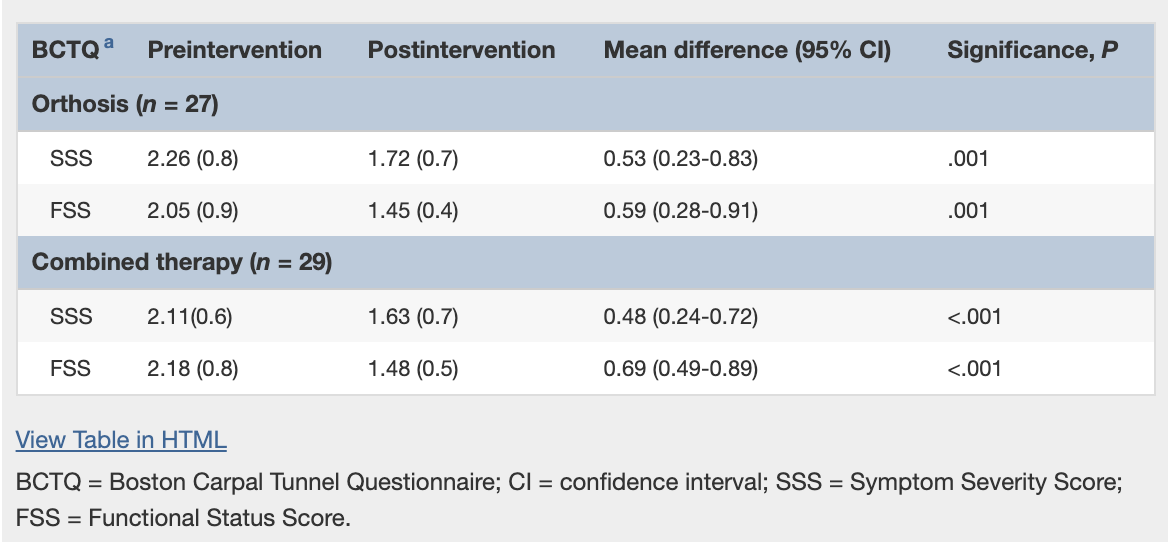
In The Weeds- 41 total patients with 56 wrists were randomly allocated to the orthosis only (n=20) vs combined (n=21) groups. Pre and post assessments were conducted using the Boston Carpal Tunnel Questionnaire (BCTQ). Post assessment occurred after 2 months, immediately at removal of orthosis protocol.
Orthoses were volar wrist cock up made custom from thermoplastic by a trained occupational therapist. Pt’s were to wear the orthoses for 8 weeks and only allowed to come out of carpal tunnel orthosis for 1 hour per day. Adjustments were made as needed based on discomfort. The Combined group used the same orthosis parameters but added in the use of weekly ultrasound for 5 minutes as well as nerve and tendon gliding exercises for 10 repetitions and 10 sessions per day.
Bring it Home- Analysis of the two groups showed statistically significant improvement in Symptom Severity Score (SSS) as well as Functional Status Score (FSS). There was not, however, a statistical significance on outcomes between groups. This is in contrast to other articles (Baysal et al) which demonstrate a significant difference between orthosis alone and orthosis and conservative therapy.
The outcomes contradict the hypothesis of the authors. They admit the limitations of their study include the use of exercises that did not replicate their model study as well as a lack of follow up at another interval after cessation of orthosis use at the 8 week mark. Symptom decrease with orthosis use only might not be sustainable without the conservative treatment to promote healthy motion moving forward. This would be identifiable with additional follow up after the 8 week mark.
It is also unclear if the participants in the Orthosis Only group had regular follow-ups during the 8 weeks for splint modification (splint for carpal tunnel occupational therapy) or compliance check-in. This return frequency would not necessarily directly replicate clinical application of an orthosis only treatment plan.
Baysal, O., Altay, Z., Ozcan, C., Ertem, K., Yologlu, S., & Kayhan, A. (2006). Comparison of three conservative treatment protocols in carpal tunnel syndrome. International journal of clinical practice, 60(7), 820-828.
More To Read

7 Tips to Help your Patients Manage Hand Osteoarthritis
Introduction Osteoarthritis in the hands can be frustrating and debilitating. As a form of degenerative joint disease, it causes stiffness, pain, swelling, and reduced grip strength—making daily tasks like writing, opening jars, and typing feel exhausting. Fortunately, there’s a proven holistic approach centered on hand therapy for arthritic hands. This includes tailored exercises, targeted splinting,…

Does mirror therapy work for hand therapy patients with general orthopedic conditions?
By: Maddie Mott Rostami, R. H., Arefi, A., & Tabatabaei, S. (2013). Effect of mirror therapy on hand function in patients with hand orthopaedic injuries: a randomized controlled trial. Disability and Rehabilitation, 35(19). 1647-1651. DOI: 10.3109/09638288.2012.751132 The Skinny: How does mirror therapy work? Mirror therapy (MT) is performed by placing the patient’s injured extremity into…

Video Augmented Hand Therapy after CVA with hemiplegia.
The previous rapid review discussed the positive outcomes of video-augmented hand therapy after a CVA with hemiplegia. Please watch this vlog to discover how to make the video augmented box to make it easily integrated into your clinic. Video By: Shannon Skowbo
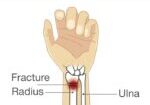
Distal radius fracture types seen in the hand therapy clinic
Distal radius fractures are one of the most common injuries seen in hand therapy. Several different distal radius fracture classification systems have been developed, and this blog post will focus on the more common types of distal radius fractures and their classification. Extra-articular fractures are either nondisplaced or displaced fractures. These fractures occur outside…

Sign-up to Get Updates Straight to Your Inbox!
Sign up with us and we will send you regular blog posts on everything hand therapy, notices every time we upload new videos and tutorials, along with handout, protocols, and other useful information.